 Project Updates
Project Update: Corteva Agriscience
novembre 23, 2026Project at a glance
PROJECT DESCRIPTION
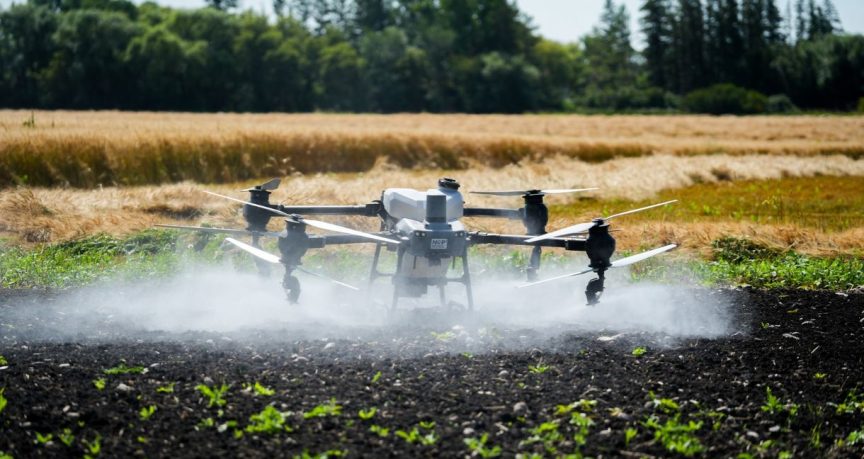
The AIVA network partnered with Corteva Agriscience to pilot full scale field trials that evaluated the efficacy of drone-applied fungicide compared against traditional tractor spray application. Across the same applied rate, the effect of spray drone water carrier volume was investigated (20L/ha, 50L/ha and 100L/ha). Yield and canopy health were analyzed across treatments and compared to an untreated control.
PRELIMINARY FINDINGS
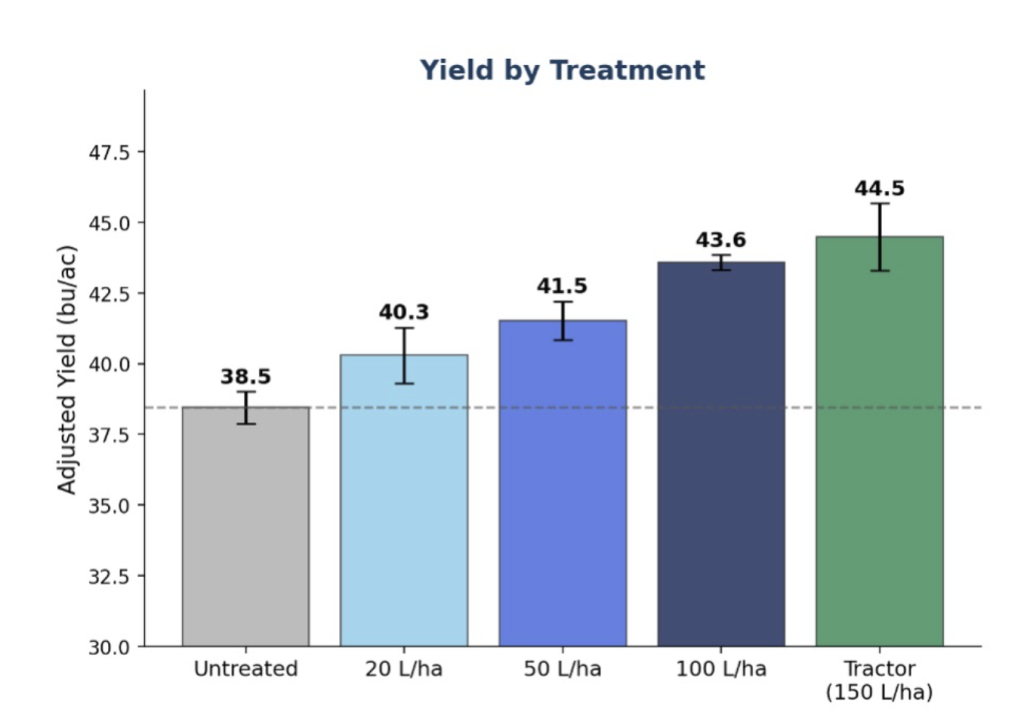
Preliminary results showed that fungicide water carrier volume drives yield. Canola yield increased from 38.6 bu/ac (untreated) to 43.6 bu/ac at the highest drone water volume (100 L/ha). While yield remained below tractor-applied fungicide (applied at 150L/ha), with 44.5 bu/ac, the 100L/ha drone treatment came within 1 bu/ac.
next steps
As yield data coming from the remaining Validation Hubs is returned and processed, Corteva Agriscience and the AIVA Network will work together to explore how drone fungicide application efficacy impacts different crops (canola and soybean) across various environmental conditions and geographies.
About the technology
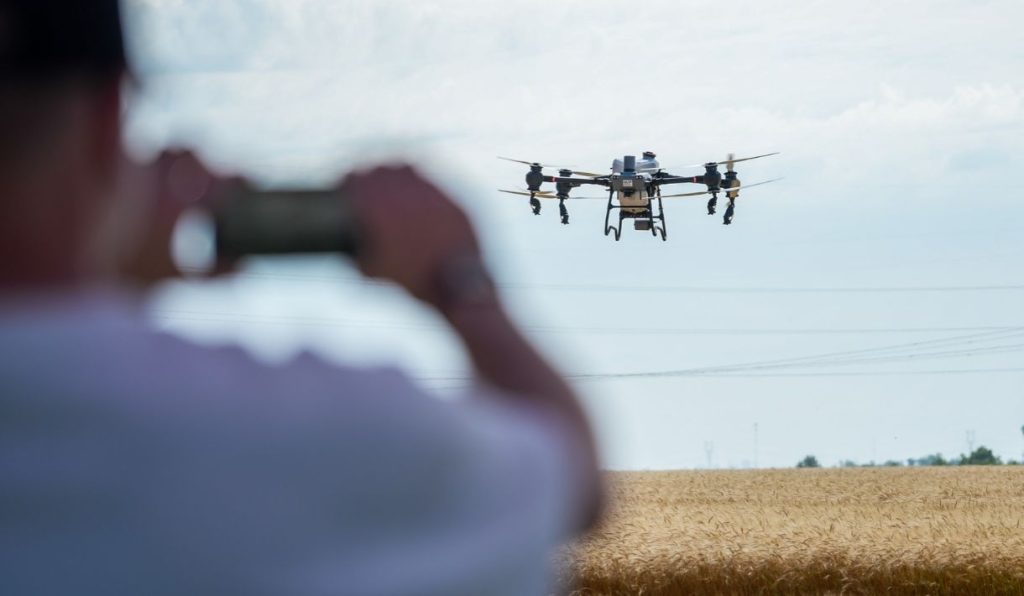
Increasing demand for targeted product applications have established spray drones as a promising method for chemical application in variable field climates and conditions. In June of 2026, Health Canada issued a Letter of No Objection regarding the use of spray drones to apply pesticides that have previously been approved for aerial application in Canada. These new changes serve as a substantial step to continue to drive spray drone adoption, keeping Canada as one of the key players at the forefront of global agricultural innovation.
Why this matters to farmers and agronomists
Spray drones allow users to target specific field regions and optimize input usage. As an alternative to traditional ground spray applications, spray drones offer the potential for high-precision product application in areas that become inaccessible to heavy ground equipment, and without the risks of crop damage or further soil compaction. As a rapidly evolving innovation globally, spray drones act as a valuable addition both to the field of digital agriculture, and as a toolkit addition to farmers for product application.
Carryload limitations and water volume
While legislation appears to be moving toward broader technology adoption on a national scale, questions remain around spray drone efficacy, notably with differing applied volumes. Drones are limited by battery life and the volume they carry, so spray drone operators require a well-organized exchange system when spraying larger field areas. Efficient changeovers to refill chemicals and exchange batteries for recharging allows operators to minimize drone downtime between sprays.
Carrying larger liquid volumes increases carryload weight, resulting in higher energy demand on drone batteries and shortened operational flight times. As such, evaluating how varying water carrier rates impact the performance of drone-applied crop protection products remains a key priority for the sector. Lowering fluid volumes reduces overall drone weight, offering the potential to cover greater acreage per flight, provided that treatment effectiveness is preserved.
Project objectives
In partnership with Corteva Agriscience, the AIVA Network evaluated the efficacy of spray drone use for fungicide application in multi-site trials using Corteva’s Viatude fungicide (picoxystrobin and prothioconazole). This project assessed the efficacy of spray drone-applied Viatude in comparison to traditional tractor application (150L/ha) on canola and soybean grown across Canada using the DJI AGRAS T50, a drone capable of carrying a 40 L spraying payload. Additionally, to explore the effect of different application volumes on fungicide efficacy, drone spray application was compared at three different drone water volumes corresponding to (20L/ha, 50L/ha, and 100L/ha). All applied volumes, both tractor and drone, were applied to comply with Viatude’s label rate of 0.84 L/ha.
Trial progress to date
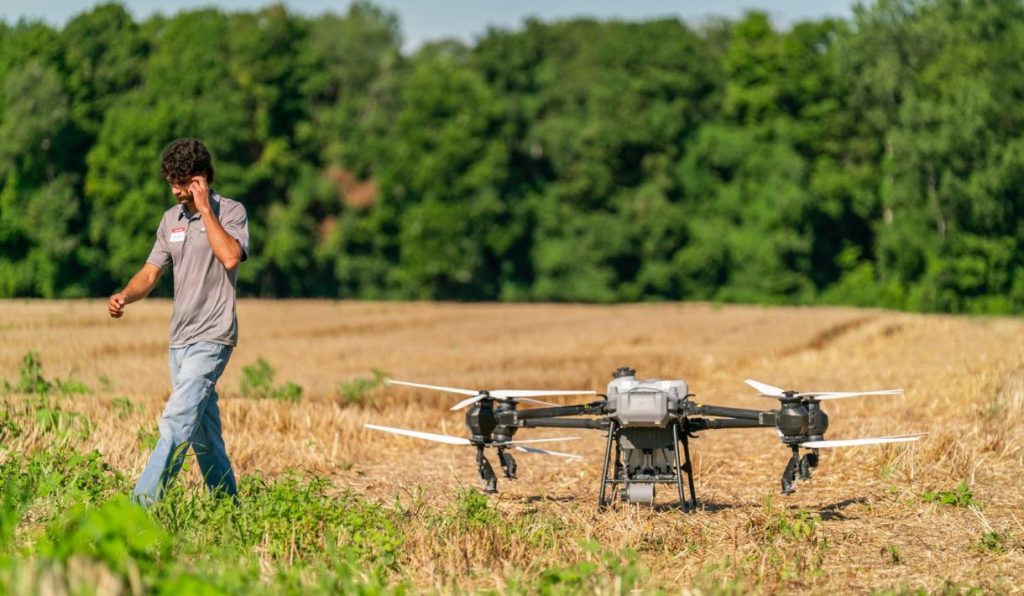
Over the 2026 growing season, spray done and tractor-applied Viatude occurred at four Validation Hubs across Canada: Olds College of Agriculture & Technology (Olds, AB), EMILI Innovation Farms (Grosse Isle, MB), Innovation Farms Ontario (Bothwell, ON) and Area X.O (Ottawa, ON).
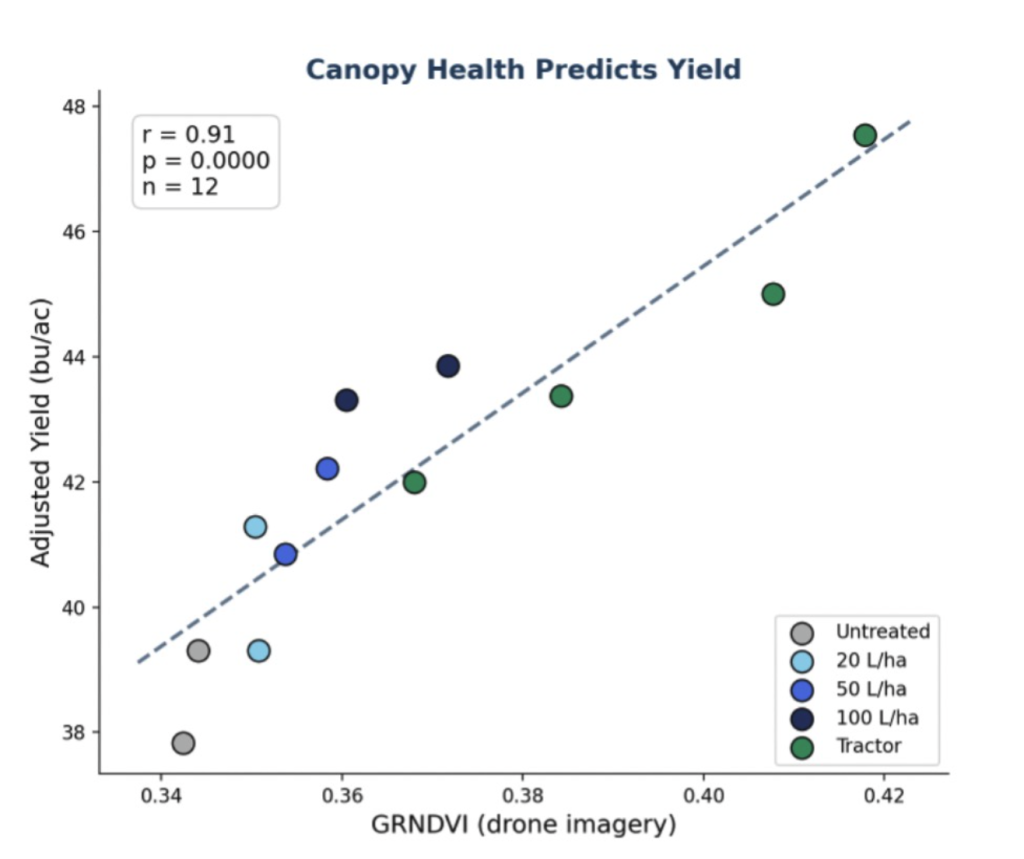
At each of the Hubs, detailed environmental data was recorded at the time of spray to aid in downstream analyses on spray coverage and potential drift. Multispectral drone imagery of the trial plots was collected approximately one month post-application, such that plot-level vegetation indices could be extracted. These vegetation indices, including the Green-Red Normalized Difference Vegetation Index (GRNDVI), provide an indirect measurement of crop canopy health at the time of imagery capture. As the season progressed, Sclerotinia white mould scouting occurred prior to harvest, accounting for disease incidence and severity across trial plots. Treatment plots were harvested at each of the Validation Hubs, and yield was measured across each experimental plot.
At the time of reporting, data and spray drone project learnings have been collected from EMILI Innovation Farms. While the other three Validation Hubs are still in the final stages of data collection, this report will share conclusions generated from the trial at EMILI. The AIVA Network looks forward to compiling the rest of the learnings from all Validation Hubs to prepare a final report in the near future.
Preliminary learnings from the AIVA trial at EMILI Innovation Farms
The trial at EMILI Innovation Farms was conducted on canola, with drone and tractor spray applications occurring in July, 2026, and aerial imagery capture recorded approximately one month later. Yield was measured using a John Deere X9 combine equipped with a precision yield monitor. Multispectral aerial imagery was captured using a DJI M3M drone to determine GRNDVI.
Trial results show that yield increased with drone water volume; with the untreated control, 20L/ha, 50L/ha and 100L/ha treatments yielding 38.6, 40.3, 41.5, and 43.6 bu/ac, respectively (Figure 1). Although tractor-sprayed (150 L/ha) plots yielded the highest at 44.5 bu/ac, it should be noted that the 100L/ha drone application yielded within 1 bu/ac of the tractor treatment, while remaining more than 5 bu/ac above the untreated control. This would suggest that spray drone applications have the potential to approach tractor efficacy, and will be verified with incoming data from the remaining Validation Hubs.
Multispectral imagery data revealed that GRNDVI strongly correlated with plot yield (r = 0.91, p < 0.001), indicating that canopy health differences resulting from treatment were detectable one month after application (Figure 2). Furthermore, water carrier volume, GRNDVI, and yield were all significantly intercorrelated (all r > 0.84, all p < 0.001), indicating that higher application volumes produced healthier canopies, which translated into higher yields. Furthermore, these results suggest that drone imagery data from a single post-application multispectral flight can serve as an early predictor of fungicide efficacy in canola, potentially allowing treatment assessment weeks before harvest.
General spray drone learnings across the 2026 season
In addition to measuring drone application efficacy, the AIVA Network gathered general insights and perspectives on spray drone technology throughout the growing season. These observations stem from conversations with drone applicators, farmers, Validation Hub teams, and industry professionals with hands-on experience in Canadian spray drone pesticide application following this year’s regulatory updates.
Proper calibration is critical to unlocking the full potential of agricultural spray drones. Throughout the 2026 field season, working with various drone operators across different sites highlighted the critical role of pre-flight calibration. With the many interacting variables involved in drone application (mapping, environmental conditions, drone speed, drone height, swath width, droplet size, etc.) regular calibration is an essential step to ensure accurate equipment operation. Similarly, working with locally based drone retailers or applicators allows for timely resolution of technical issues as they arise, keeping drone applications accurate and minimizing downtime.
With increasing regulatory momentum shifting towards drone-applied pesticides in Canada, a topic of industry concern revolves around applicator experience. As a sector of rapid expansion and innovation, spray drones bring substantial interest from industries outside of conventional agriculture. Brian VanSteelandt, a DJI Sales Specialist (Volley Aerobotics) based in St Marys, Ontario shared; “My biggest concern regarding spray drones: individuals starting new spray drone businesses without an agricultural background or spraying experience. Some operators enter the market simply because they have the capital and find the technology appealing… A solid foundation in basic spraying principles is essential before undertaking any application”. Working with experienced operators with strong agricultural understanding allows for further refinement of drone spray best practices, especially at a time when the sector continues to explore efficacy on a wider scale.
Lastly, while spray drones show immense early potential, it is important for users, especially those involved with broadacre agriculture, to consider them as tools to be implemented in tandem with larger-scale spray machinery such as tractor-mounted sprayers. While drone innovation continues to rapidly evolve, pesticide drone spray use is still in its early stages in Canada, and will only improve as best practices are further developed.
Next steps
The AIVA Network is in the process of collecting yield data from the remaining Validation Hubs. Working with Corteva Agriscience, collected data will be analyzed to investigate how spray drone efficacy is impacted when working with different crop types, regions, and environmental conditions. With the completion of this dataset and analyses, the AIVA Network will be able to draw further conclusions regarding the impact of varying drone water volumes on spray efficacy. Additionally, gathered feedback is being reviewed to determine ideal use cases and best practices. These learnings and analyses will be assembled into a report to be published in the near future.